
Blog
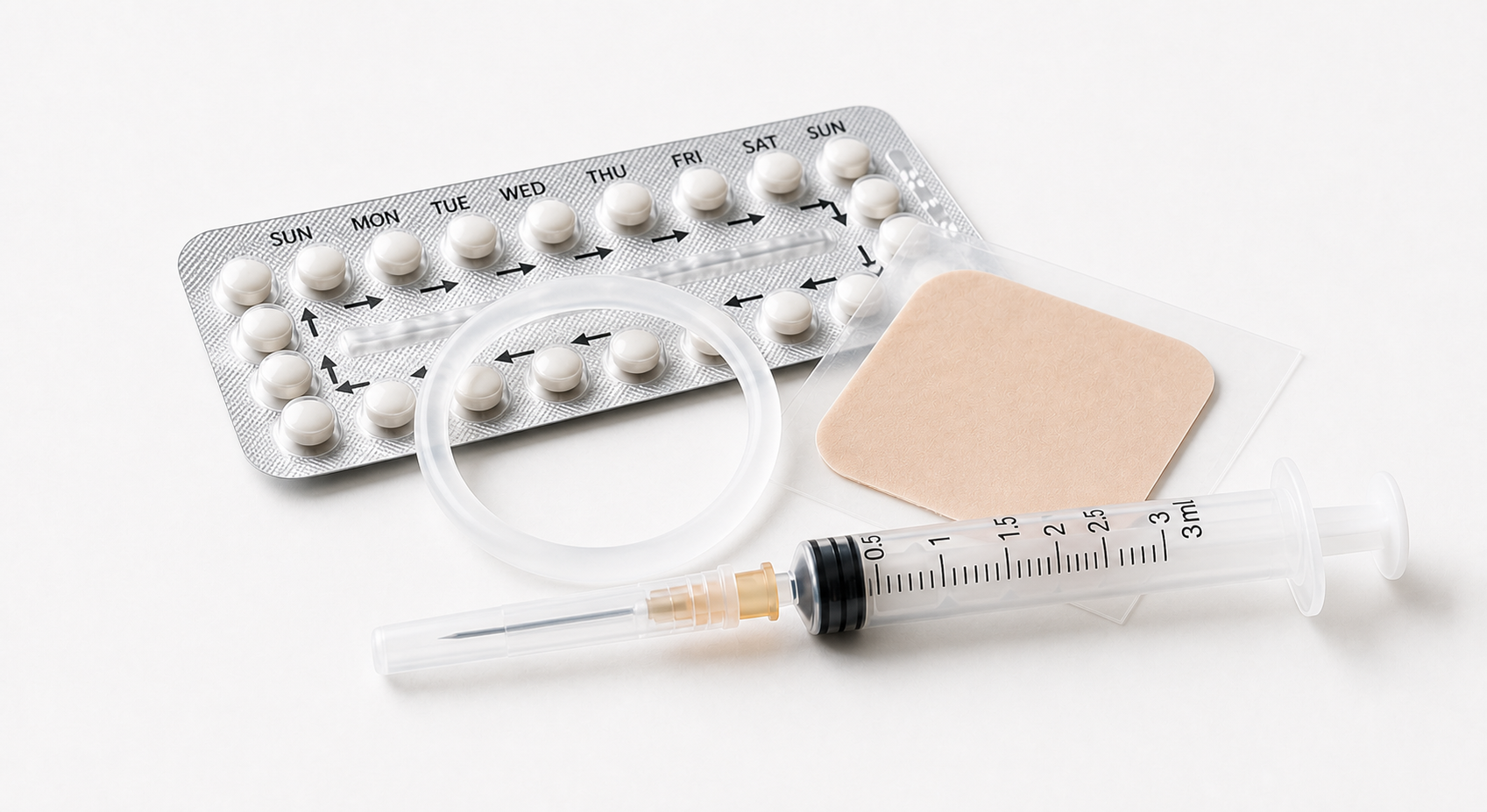
Hormonal Contraception: Pills, Patches, Rings, and Injections
Many Super Thrifty pharmacists are now authorized to prescribe certain hormonal contraceptive products, at no-cost, for those with a valid Manitoba Health Registration Card.* There are different types of hormonal contraception suited to different lifestyles and preferences. A quick, discreet chat with your Super Thrifty pharmacist can help you determine which method fits you best.
For now, let’s explore how each method works, what to expect, and who they might suit best.
The Birth Control Pill: A Classic Choice
The birth control pill is probably the most well-known hormonal contraceptive. Taken daily, it typically contains a combination of estrogen and progestin hormones, which work together to prevent ovulation. Some pills contain only progestin, catering to those who may be sensitive to estrogen or have specific health considerations.
What makes the pill a favourite for many is its reliability when taken consistently along with additional benefits like regulating periods and reducing PMS symptoms. The downside? Forgetting a pill can lower its effectiveness, and some people experience side effects like nausea or mood changes when they begin taking oral contraceptives.
The Transdermal Patch: Hormones on Your Skin
If remembering a daily pill feels like a hassle, the transdermal patch might be a great alternative. This small patch sticks to your skin and releases hormones steadily over the course of a week. You change it once a week for three weeks, then take a week off, during which you usually get your period.
The patch is discreet, easy to use, and just as effective as the pill. However, it must be applied properly to clean, dry skin and avoided on areas where it might rub off easily, like the breasts. Some users report mild skin irritation where the patch is placed.
The Vaginal Ring: A Monthly Hormonal Helper
The vaginal ring is a flexible, transparent ring inserted into the vagina where it releases hormones locally over three weeks. After three weeks, you remove it for a week to allow your period to occur, then insert a new ring.
This method offers convenience—you only have to think about it once a month—and steady hormone delivery can reduce some side effects associated with hormone level fluctuations. It’s also invisible and doesn’t require daily attention. Some users may feel the ring during intercourse or experience mild irritation, but many find these issues minor.
The Contraceptive Injection: Long-Lasting and Low Maintenance
For those who prefer a “set it and forget it” method, the contraceptive injection of progestin is typically given every 8 to 13 weeks depending on the type. It prevents ovulation and thickens cervical mucus to block sperm.
The injection is highly effective and great for people who want to avoid daily or weekly routines. On the flip side, it can cause changes in menstrual bleeding patterns—some may stop having periods altogether, while others might experience irregular spotting. Also, fertility may take some time to return after stopping the shots.
Choosing What’s Right for You
Hormonal contraception isn’t one-size-fits-all, your Super Thrifty pharmacist can assess your needs and help you make an empowered choice about your reproductive health.
*A pharmacist may not be able to prescribe in every situation. If your health history, symptoms or medication needs require care outside the pharmacist’s scope of practice, the pharmacist may refer you to another healthcare provider.